

SKU:EK204L
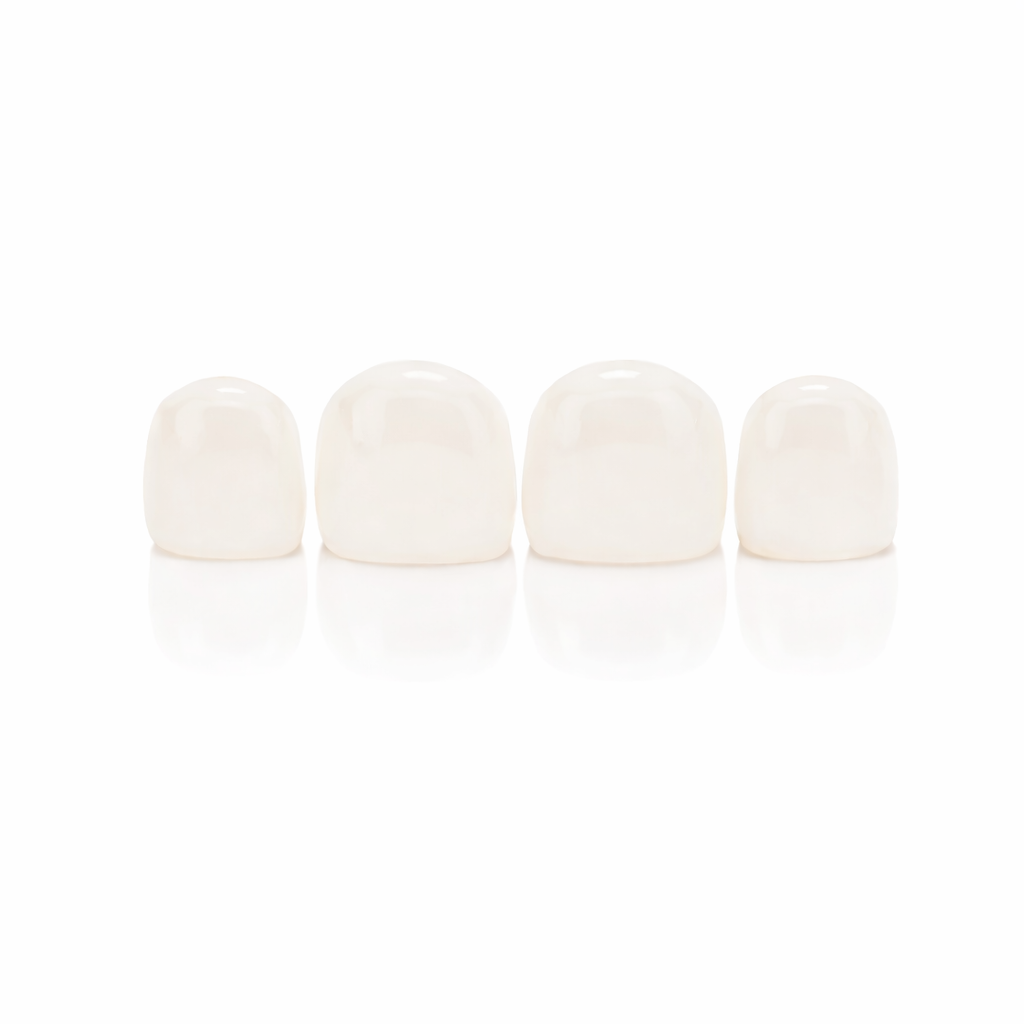
ZR NuSmile Set for Primary Central and Lateral Incisors
ZR NuSmile Set for Primary Central and Lateral Incisors
Najniższa cena z 30 dni: 1.920,00 zł PLN
Couldn't load pickup availability
NuSmile ZR Zirconia Crown Kits for deciduous central and lateral incisors available in four variants:
Evolutionary Kit - includes 16 final NuSmile ZR crowns, in sizes 1 to 3 for central incisors, sizes 2 to 4 for lateral incisors, and 12 Try-in crowns for size fitting.
Starter Kit - the most popular zirconia crown kit for anterior teeth. Includes 40 final NuSmile ZR crowns, sizes 1 to 5, and 36 Try-in crowns for size fitting.
Professional Kit - Includes 84 final NuSmile ZR crowns, all sizes, and 36 Try-in crowns for size fitting.
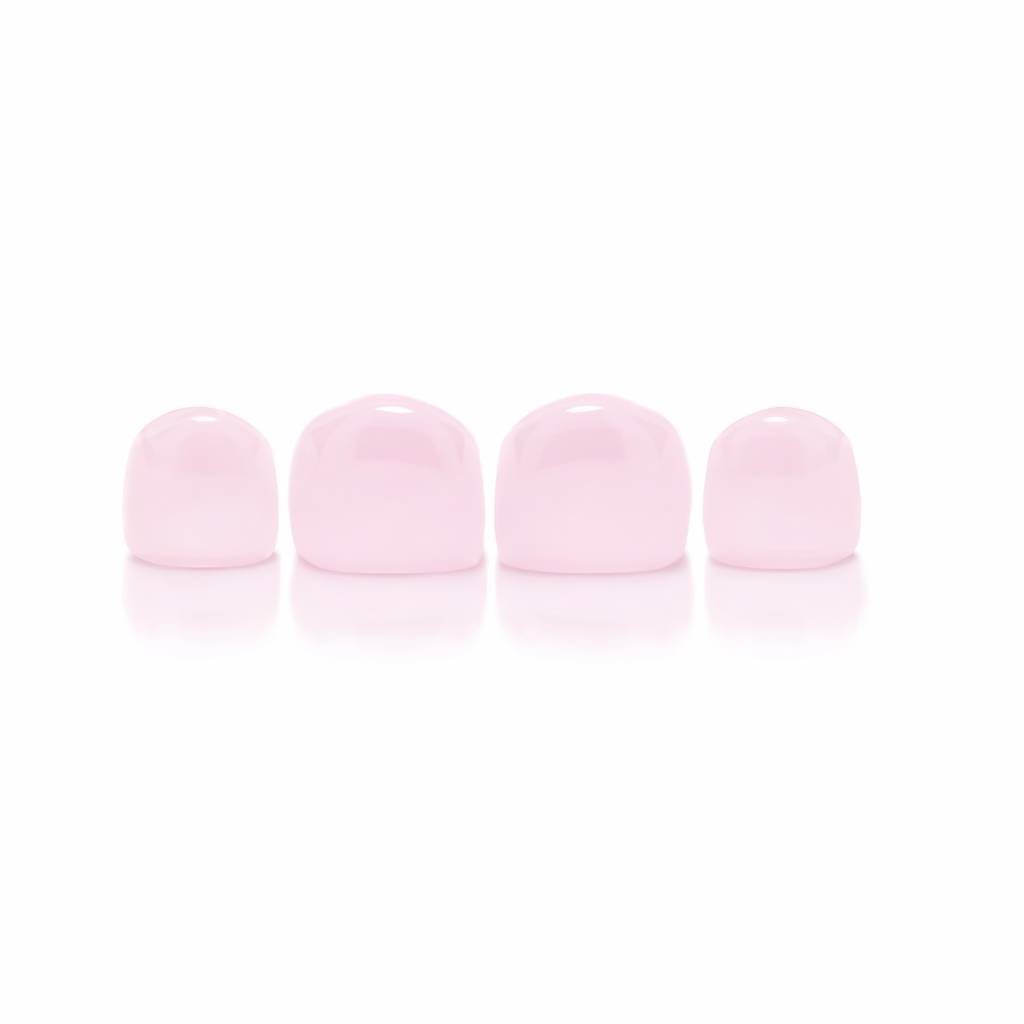
Try-In Kit - Includes 36 Try-In crowns, exact duplicates of the final crowns. Used for trial fitting during preparation, protecting the final crown from contamination. Helps select the correct size of the NuSmile ZR zirconia crown.
NuSmile ZR is the latest generation of pediatric restorative technology, representing an ideal balance between art and science. Made from zirconia ceramic, NuSmile ZR offers excellent, nature-mimicking aesthetics, superior durability, and easy placement. NuSmile ZR and its matching Try-In crowns are part of a simple and convenient complete zirconia crown system that delivers the best results for patients.
What are NuSmile ZR crowns made of?
NuSmile ZR crowns are made from high-quality Japanese monolithic Y-TZP zirconia ceramic.
Y-TZP Zirconia Ceramic – properties
High crush resistance (similar to steel)
High fracture resistance - 2000N. Very high stress intensity factor - determines resistance to crack propagation and signifies the amount of energy required to initiate fracture in a material sample (so-called brittle fracture).
Fine-grained structure - Zirconium oxide crystals form fine grains 0.2-0.5 microns in size. Zirconia has a very low porosity coefficient – it has a very uniform structure. Low porosity in tetragonal form also means that it is a non-absorbent material. High density (approx. 6g/cm3 after sintering) and lack of surface porosity translate into a reduced risk of cracking or fracture.
Biocompatibility and bio-conformity - It can be used in restorations adjacent to gold, steel, and pressed porcelain. Does not cause an allergic reaction. Additionally, patients are safely diagnosed in MRI scans.
Low tendency for bacterial plaque accumulation
Good insulator - No thermal conductivity also means no tooth hypersensitivity effect!
Low intrinsic mass - Zirconia is a light material compared to precious metals. No interaction with other dental materials.
High hardness - Zirconia hardness is approximately 1250 Hv on the Vickers scale. For comparison, the value for gold is 200-260, for non-precious alloys 300-350, and for traditional porcelain 380.
Refractoriness - The melting point of zirconia is 2700 degrees C.
Relative corrosion resistance - Easily covered by a protective surface layer of oxides that prevent further oxidation. No gingival discoloration effect.
Low ability to absorb ionizing radiation
Disinfection and sterilization
Acceptable methods are cold sterilization, autoclave, or steam sterilization according to standard sterilizer manufacturer instructions.
How to properly cement a NuSmile ZR crown?
It is very important that saliva or blood do not contaminate the internal surface of zirconia crowns. For this reason, NuSmile ZR Try-In crowns are included in the kits for use during try-in (trial fitting) to avoid contamination of the NuSmile ZR crown to be used with saliva or blood. All NuSmile ZR Try-In crowns are precisely manufactured to have the identical size and shape as NuSmile ZR crowns and can be reused and autoclaved multiple times for fitting. If the internal surface of a NuSmile ZR crown is contaminated, one of two processes is recommended to best retain the cement on the crown. Sandblast the inside of the crown with clean aluminum oxide or clean the internal surface of the crown with Ivoclean.
NuSmile BioCem® Universal BioActive RMGI cement, Ceramir, resin cement, or other resin-modified glass ionomer cement can be used for cementing NuSmile ZR crowns. Recommended product for cementing crowns in children: Fuji Plus glass ionomer cement.
Completely fill the crown so that there are no empty spaces during placement. If pulp treatment was performed using eugenol-based material placed in the pulp chamber, the eugenol-based material should be covered with clear glass ionomer before cementing, unless GI was used for cementing.
The NuSmile ZR crown should be passively fitted and held in place until the cement sets by itself or is light-cured.
Can the NuSmile ZR crown be shortened? If so, how?
NuSmile ZR adjustment burs can be used for circumferential reduction and blending the crown margin. It is important to use a light touch and a continuous water spray. NuSmile ZR crown polishing tools should be used to restore a smooth crown surface after any adjustments.
What is the gingival response to NuSmile ZR crowns?
Gingival response is excellent due to the anatomically correct contours and high biocompatibility of NuSmile ZR.
With a properly fitted crown, a correct gingival response is expected within 7-10 days.
Share