


25-26 OCTOBER 2025
Scarecrows on the Lachs - Communication in a Pedodontic Office
Educational points: 14
This training is for you if you want to:
- Improve your qualifications in working with children and their caregivers,
- Increase your professional effectiveness by better understanding the needs of Young Patients,
- Develop communication skills and improve relationships with parents,
- Gain knowledge in child psychology to more effectively deal with emotional and behavioral challenges in the office,
- Learn practical techniques to help you cope with difficult professional situations,
- Build long-term relationships with patients and their parents, which impact loyalty and satisfaction with the office's services.
Day 1
Foundations of cooperation
- You will understand the interdependencies between the doctor, the child, and the parent/guardian.
- You will learn how to build trust and long-term relationships, which are crucial for effective treatment.
- You will learn how to motivate parents to engage in the process of preventing and treating tooth decay at home.
Effective communication
- You will master active listening – techniques of paraphrasing, clarification, and summarizing.
- You will learn the principles of transparent communication to convey information precisely.
- You will learn how to avoid communication errors that lead to misunderstandings with parents and children.
Assertive attitude
- You will learn how to be both firm and kind towards patients and their guardians.
- You will learn the best model for formulating clear messages.
- You will gain the ability to effectively deal with difficult situations, such as parents' lateness, children's fears, or time pressure.
Setting the "rules of the game"
- You will learn how to establish rules of cooperation with parents at an administrative, professional, and psychological level.
- You will understand how a contract influences treatment effectiveness and builds mutual trust.
- You will learn how to take care of yourself and your well-being, so that caring for a young patient and difficult situations in the office do not disrupt your well-being.
Day II
Working with children's emotions
- You will learn about Jean Piaget's four stages of cognitive development in children and how to apply this knowledge to working with children in the clinic.
- You will learn how to accept a child's feelings and respond in a supportive way (without judging, denying, or minimizing).
- You will master various tools to help children cope with stress.
Encouraging children to cooperate
- You will learn to avoid negative communication, such as commands, judgments, or sarcasm, which can deepen a child's resistance.
- You will learn how to speak to a child to increase their sense of autonomy and willingness to cooperate.
- You will learn simple techniques to encourage cooperation in the treatment process.
Effective communication with children
- You will master techniques for adapting language to a child's age and perceptual abilities.
- You will learn how to explain what is happening during treatment, appropriately for the child's developmental level.
- You will understand how to authentically and respectfully reinforce children's positive behaviors and how to avoid communication pitfalls (e.g., manipulation or empty promises).
Working with parents
- You will learn ways to motivate parents to support the treatment process at home.
- You will learn how to respond to parents' difficult emotions in a way that fosters cooperation and builds relationships.

Participants will leave the training with a toolkit of tools and techniques to help them:
- Build long-term relationships with patients and their families, fostering loyalty and trust
- Improve their communication skills, which will enhance their professionalism and comfort at work
- Reduce stress and tension associated with difficult situations in the pediatric dental office
- Increase treatment effectiveness through better parental involvement and cooperation with children
- Be inspired for further professional development and the introduction of innovative practices in their daily work
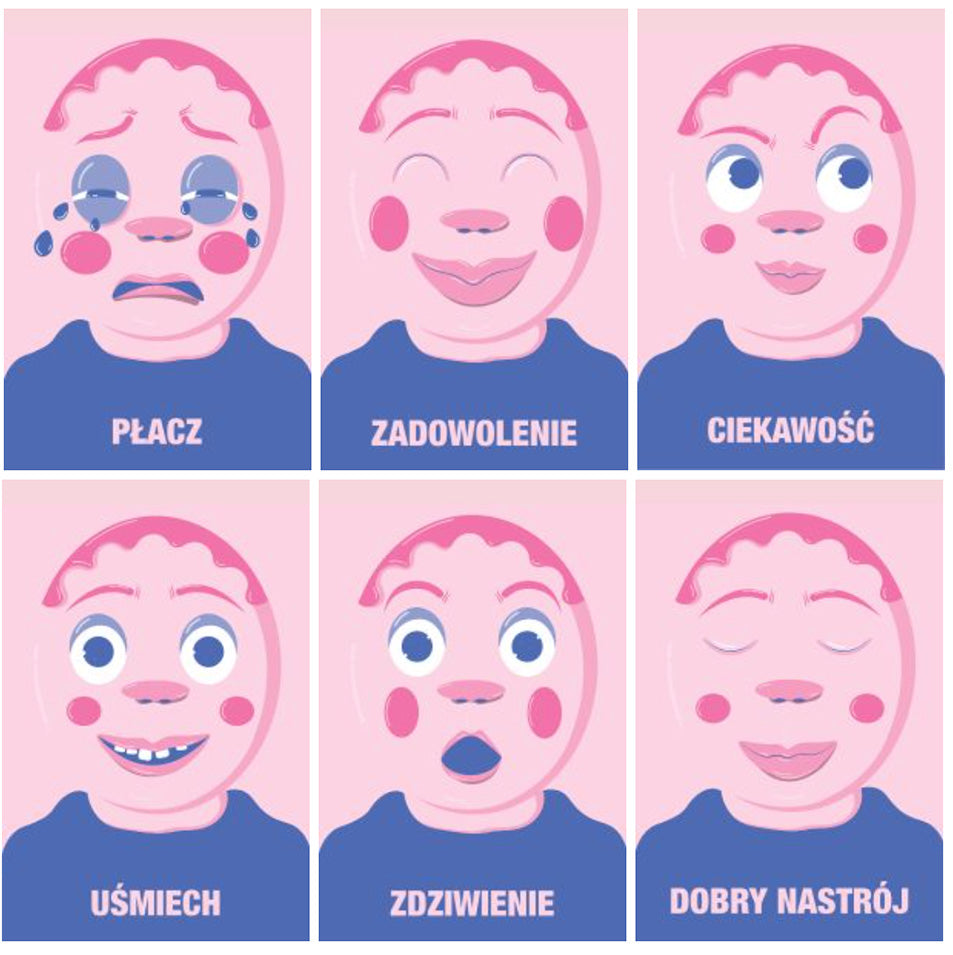
What do you get in the SCARES FOR LAUGHS package?
Emotion cards for better communication in the office
One month after the training, we invite you to a unique, two-hour online consultation, during which you will be able to:
- Share your achievements – tell us how you implemented new communication methods in your work with Little Patients and their Parents.
- Exchange experiences – see how other participants deal with challenges and draw inspiration.
- Ask questions and get support – if you encountered difficulties, this is the perfect time to consult them and find solutions.
Schedule:
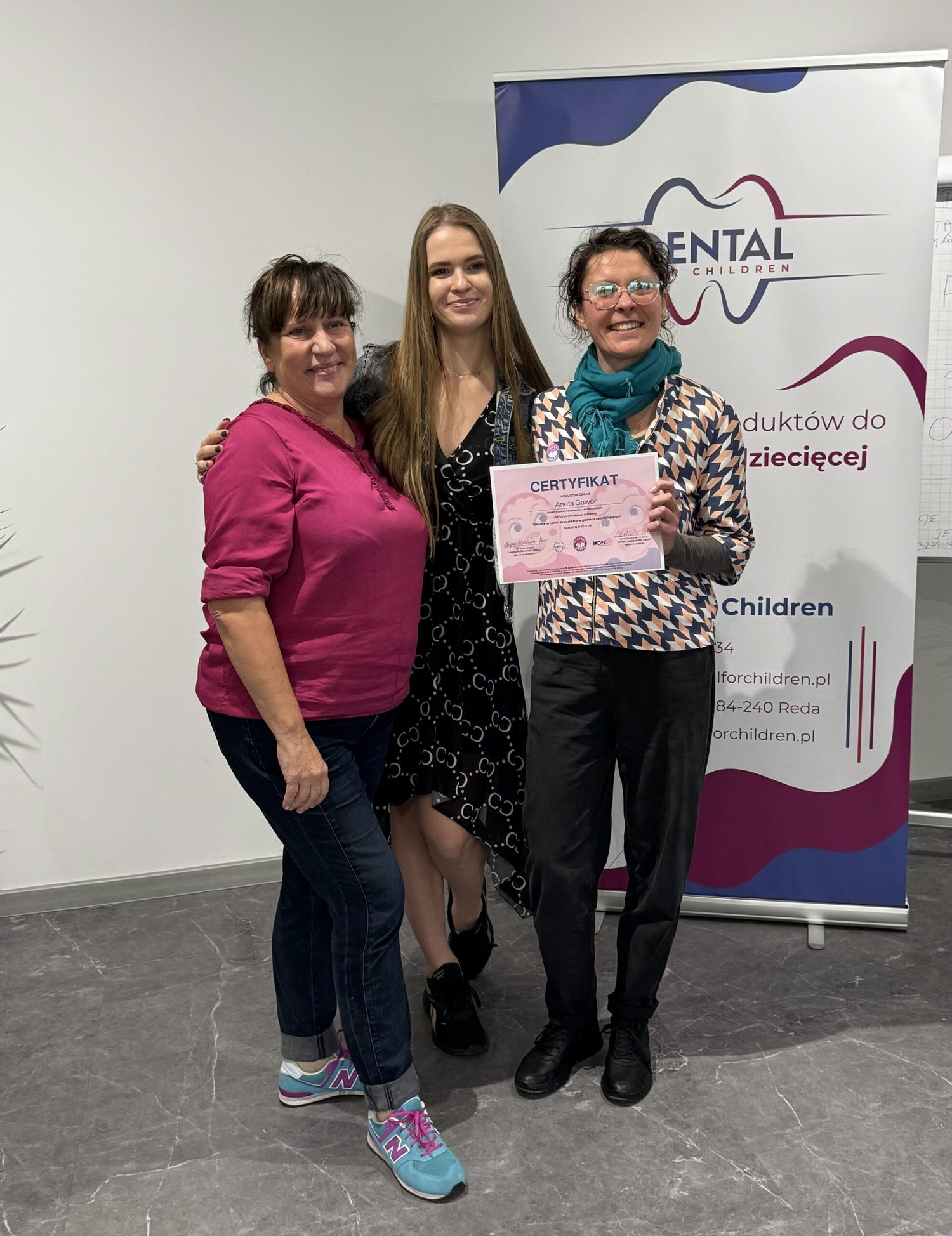
Schedule
Day I -Saturday
- Introduction and communication warm-up
- Introduction to the pediatric dentistry triangle:
- Discussing the doctor-parent-child relationship
- Foundations of effective communication: Key communication principles.
- Adapting communication to parental interpersonal styles: How to recognize and respond to different communication styles.
- Basic communication tools: Practical communication techniques and models.
- Communication models in the work of a pediatric dentist: Examples and case studies.
- Assertiveness in doctors: Assertive attitude and tools in daily practice.
- "Difficult parent" and other interventions: How to handle challenging situations.
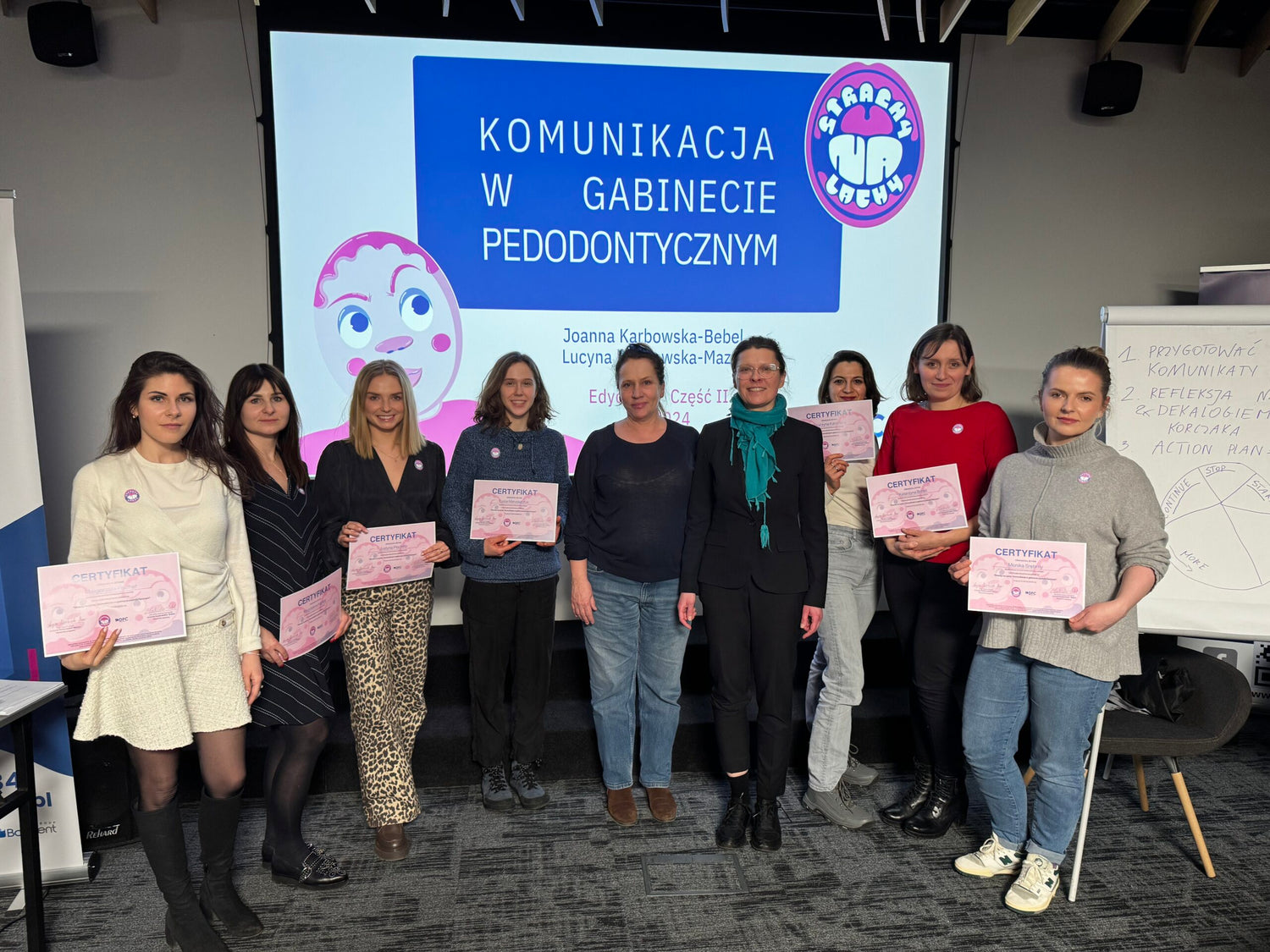
Schedule
Day II - Sunday
- Outline of developmental psychology of children aged 2-10: Key stages and their importance in communication.
- The importance and use of empathy in working with children: How to build a relationship based on trust.
- Tools for building contact and relationships: Practical exercises.
- Tools for encouraging cooperation: How to motivate young patients.
- Children with different sensitivities: Specific needs and approaches.
- Children with developmental disorders – how to work with them: Techniques and strategies.
- Summary of the training and action plan: Practical application of acquired knowledge.

Less stress. More collaboration. Better treatment.
You will learn how to build trust, strengthen children's cooperation, and communicate effectively with parents – even in demanding situations.
Price: 2999
Zarezerwuj miejsce na szkoleniu:
✔ Dziękujemy za zgłoszenie! 😄🦷
Twoje miejsce na szkoleniu zostanie potwierdzone po wpłacie zaliczki.
Szczegóły dotyczące płatności oraz dalsze informacje zostaną wysłane na podany adres e-mail.
